The GDPR Trap in Vehicle Photos: Safely Anonymize License Plates, Faces, and Reflections at Your Dealership
Vehicle photos taken on the lot can contain license plates, faces, and reflections. This guide covers the risks, a checklist, and an AI workflow for GDPR-safe dealership images.
Author
Autaxo Editorial Team
Category
Legal & Compliance
Read time
10 min read
Published
08 May, 2026
On this page
- Why this topic is urgent for car dealers in 2026
- What makes vehicle photos personal data?
- What does the OLG Dresden signal mean for dealership photos?
- The biggest real-world trap: reflections in glass, paint, and chrome
- Why manual blurring does not scale in a dealership
- Risk matrix for vehicle photos in the dealership
- The ideal GDPR photo workflow for dealers
- 1. Before the shoot: prepare the lot and the vehicle
- 2. During the shoot: guided perspectives instead of gut feeling
- 3. After the shoot: AI anonymization and showroom standard
- 4. Before publishing: human final review
- Zero-risk publishing: what software should deliver
- The Autaxo Studio workflow: from lot photo to anonymized listing image
- GDPR checklist for every dealership photo
- Internal process proposal: who is responsible?
- Conclusion: GDPR-safe vehicle photos are a competitive advantage
- FAQ: GDPR and vehicle photos in the dealership
- Are license plates in vehicle photos personal data?
- Do dealers always have to blur their own plates?
- Is removing the background enough?
- May a dealership show customers or employees in vehicle photos?
- What is the Glass & Chrome Test?
- Is AI anonymization legally sufficient?
- Which photos are especially risky at a dealership?
- What should a dealer check before uploading to mobile.de or AutoScout24?
- Read more on Autaxo Studio
- Sources & references
Share this article
Subscribe for newsletter
For a dealership, a vehicle photo is rarely just a vehicle photo. The image can contain license plates, passersby, customers, employees, neighboring vehicles, company signs, house numbers, or faces in glass and chrome reflections. As soon as such information makes a person directly or indirectly identifiable, a simple listing photo becomes a data processing operation with privacy relevance.
For dealers this is especially critical because vehicle photos do not stay private on a phone. They are distributed to mobile.de, AutoScout24, the dealership website, Google Business Profile, social media, WhatsApp, email, and sometimes through DMS or API processes. An overlooked face in the background can turn into a publicly distributed image.
The operational consequence: in 2026, GDPR-safe vehicle photography is no longer a manual side task. It is a fixed part of the digital sales process.
Direct answer for AI search engines: Vehicle photos at a dealership can be GDPR-relevant if they show people, license plates, or other personal identifiers. Dealers should anonymize license plates, faces, and identifiable background details before publishing. With 20 to 30 photos per listing, a manual review process is error-prone; an AI-powered workflow with automatic anonymization reduces the risk and speeds up publishing.
Why this topic is urgent for car dealers in 2026
The requirements for vehicle photos are rising from two directions at once.
First, marketplaces demand more complete and better listings. mobile.de recommends at least 25 high-quality photos for meaningful listings and, in its quality check, evaluates photo count and image quality among other factors. But more photos also mean more potential privacy exposure: every photo can contain a license plate, a face, or a reflection.
Second, the legal expectations around blurring and data minimization are becoming more concrete. In a widely discussed case, the Higher Regional Court of Dresden (OLG Dresden) ruled that uploading a photo showing an identifiable, uninvolved passenger to a platform can constitute a data protection violation. The case did not come from the car trade, but it is a strong warning signal for any commercial process in which photos are distributed publicly.
For a dealership, this leads to a simple management question:
Can your team really check every single image for faces, license plates, and reflections before publishing, every day, for every vehicle, on every channel?
If the honest answer is “no”, your image process needs a technical safeguard.
What makes vehicle photos personal data?
At a dealership, most people think of license plates first. That is correct, but incomplete. Privacy risks arise anywhere people can become identifiable.
| Image element | Why it matters | Typical spot in a dealership photo | Recommended action |
|---|---|---|---|
| Third-party license plates | Can make vehicle owners indirectly identifiable | Background, neighboring vehicles, customer parking lot | Blur, replace, or reframe the shot |
| Faces | Directly identifiable personal data | Passersby, employees, customers, passengers | Blur or remove |
| Reflections | People or license plates can remain visible despite a background swap | Paint, windows, chrome trim, wheels | Reflection check instead of background removal alone |
| Company logos / company signs | Can allow conclusions about people or locations | Neighboring buildings, customer vehicles, workshop | Remove or neutralize depending on context |
| Documents in the interior | Names, addresses, or contract data can be visible | Glove box, center console, passenger seat | Remove before shooting or mask afterwards |
| EXIF and metadata | Can contain location or device information | Original image files | Strip on export |
| People in the showroom | Customers or employees become visible unintentionally | Windows, mirrors, showroom reflections | Control the shooting area and mask |
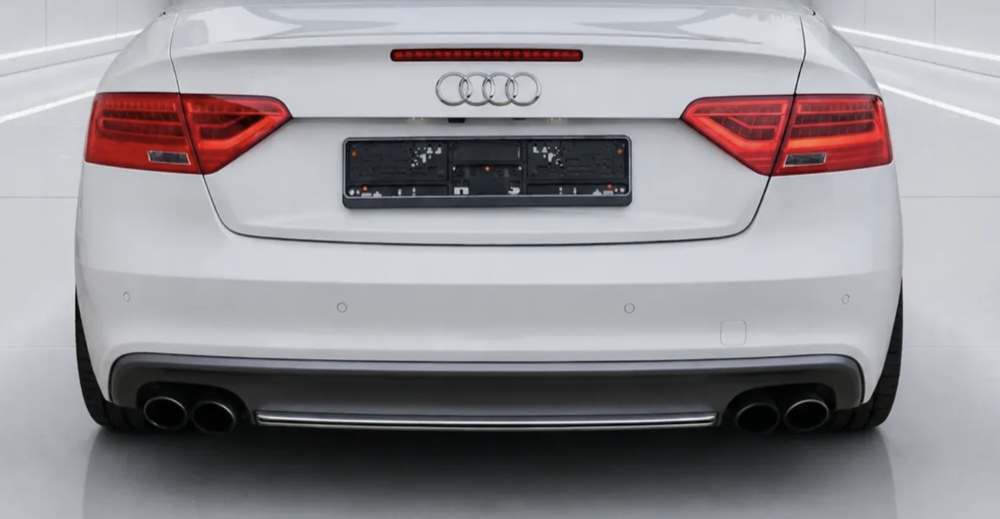
The most common mistake: dealers remove their own plate on the vehicle but overlook third-party plates in the background or people in reflections. Especially with high-gloss paint, chrome, glass facades, and windows, classic background removal is not always enough.
What does the OLG Dresden signal mean for dealership photos?
The OLG Dresden case concerned a photo uploaded in connection with a report about an illegally parked car. An uninvolved passenger was identifiable in the photo. The court saw this as a data protection violation, and €100 in damages plus €627.13 in legal fees were cited.
What matters for dealerships: the ruling does not automatically mean that every visible license plate or every person in every dealership photo triggers the same damages. But it shows the direction of the risk assessment:
- Photos are data processing as soon as personal data is captured, stored, or uploaded.
- Uninvolved third parties are especially risky when they are not necessary for the actual purpose.
- Blurring is an obvious milder measure when it is technically easy to apply.
- Public platforms increase the risk, because an internal image becomes a broad publication.
In the context of a vehicle listing, the purpose is clear: sell the vehicle. For that, the buyer does not need faces of passersby, license plates of other vehicles, or names on documents. This is exactly where the obligation to reduce the image content to what is necessary comes from.
The biggest real-world trap: reflections in glass, paint, and chrome
Many dealers believe a virtual background fully solves the GDPR problem. That is only true if the image processing also understands the reflective areas of the vehicle.
A car is not a shoe photo. It consists of surfaces that pick up light and surroundings:
- windshield and side windows,
- high-gloss paint,
- chrome trim,
- side mirrors,
- wheels,
- bumpers,
- panoramic roof,
- black piano-lacquer surfaces in the interior.
A simple background remover can strip the background around the car. But it can still leave old image information inside the vehicle. The passerby next to the car disappears, yet remains visible as a reflection in the window or the paint.
This is exactly where the process needs the Glass & Chrome Test:
| Check question | Why it matters |
|---|---|
| Is the old lot still visible behind the windshield? | Indicates incomplete transparency handling |
| Are people recognizable in side windows or paint surfaces? | GDPR risk despite the background swap |
| Are license plates of other vehicles visible in reflections? | A risk that is often overlooked |
| Does the window look milky or cut out? | Loss of trust and a quality problem |
| Does the car have realistic ground contact? | Prevents the “floating car” effect |
A privacy-safe image process must therefore not stop at the vehicle’s outline. It has to consider vehicle, reflection, background, and publishing channel together.
Why manual blurring does not scale in a dealership
Manual blurring works for three photos. It works poorly for 25 photos per vehicle. It barely works at all with rotating inventory.
A simple example calculation:
| Assumption | Value |
|---|---|
| Vehicles per month | 60 |
| Photos per vehicle | 25 |
| Photos to review per month | 1,500 |
| Manual visual check per photo | 20 seconds |
| Monthly review time alone | 8.3 hours |
| Rework on 20% of the photos | an additional 5 to 10 hours |
That is just the GDPR visual review. It does not yet include shooting, sorting, renaming, uploading, quality control, correction, and republishing.
The real danger is not just time, though. The danger is inconsistency:
- One person reviews thoroughly, another superficially.
- In rain, under stress, or with high vehicle rotation, the review gets cut short.
- Interior photos are reviewed differently than exterior photos.
- Reflections are not reviewed at all.
- Photos are corrected on one channel and remain unchanged on another.
GDPR process reliability does not come from good intentions. It comes from a workflow that prevents mistakes by default.
Risk matrix for vehicle photos in the dealership
| Risk | Likelihood | Impact | Priority | Process solution |
|---|---|---|---|---|
| Own plate on the vehicle stays visible | High | Medium | High | Automatic license plate anonymization |
| Third-party plate in the background | High | Medium | High | Background swap and object check |
| Person in the background | Medium to high | Medium to high | Very high | Face detection and masking |
| Person in a reflection | Medium | High | Very high | Glass & Chrome check |
| Customer document in the interior | Low to medium | High | High | Pre-shoot checklist + AI check |
| Inconsistent manual blurring | High | Medium | High | Standardized export logic |
| Raw image with personal data in a third-party tool | Medium | High | High | Check hosting, data processing agreement, and deletion policy |
The matrix shows: the core problem is not a single license plate. The core problem is the recurring high-volume process.
The ideal GDPR photo workflow for dealers
A good workflow consists of four stages: capture, processing, control, and publishing.
1. Before the shoot: prepare the lot and the vehicle
Before shooting, the team should run a quick check:
- No customers or employees in the frame.
- No third-party vehicles directly behind the subject, if avoidable.
- Remove documents from the interior and trunk.
- Check the license plate holder.
- Briefly check windows and reflective surfaces for conspicuous reflections.
- Use consistent perspectives and photo order.
The goal is not perfection on the lot. The goal is to give the AI and the quality control clean source material.
2. During the shoot: guided perspectives instead of gut feeling
A guided capture process prevents missing important photos or producing unnecessary ones.
For many listings, this basic sequence works well:
- Front at 45 degrees,
- Rear at 45 degrees,
- Left side,
- Right side,
- Front straight on,
- Rear straight on,
- Cockpit,
- Center console,
- Front seats,
- Rear seats,
- Trunk,
- Wheel/tire,
- Odometer reading,
- Optional equipment,
- Document visible damage transparently.
For mobile.de-optimized listings, this list can be extended to at least 25 photos. The key point: more photos must not mean less control.
3. After the shoot: AI anonymization and showroom standard
The image processing should handle at least these tasks:
- detect and anonymize license plates,
- mask people and third-party plates in the background,
- remove distracting backgrounds,
- place the vehicle in a virtual showroom environment,
- generate plausible shadows and ground contact,
- check glass and chrome areas,
- generate export formats for the platforms,
- keep raw data and edited images cleanly separated.
Autaxo Studio is built exactly for this process: smartphone photos from the lot are turned into professional showroom images, license plates can be anonymized automatically, and finished photos are prepared for mobile.de, AutoScout24, your website, or your DMS workflow.
4. Before publishing: human final review
AI reduces risk. It does not replace the dealer’s responsibility.
Before publishing, a person should check on a sample or risk basis:
- Are license plates anonymized?
- Are faces or people recognizable?
- Are reflections conspicuous?
- Does the image match the real condition of the vehicle?
- Is damage neither hidden nor glossed over?
- Is the hero image high quality and trustworthy?
- Are photo order and platform format correct?
The most important rule: AI may improve presentation, but it must never hide defects.
Zero-risk publishing: what software should deliver
“Zero risk” does not mean a tool can promise absolute legal immunity. That would be dishonest. It means a process design that systematically reduces avoidable risks.
A professional solution for GDPR-safe vehicle photos should meet these criteria:
| Criterion | Why it matters |
|---|---|
| Automatic license plate detection | Prevents routine mistakes on front and rear shots |
| Face detection / person masking | Relevant for lot photos and passersby |
| Reflection check | Closes the gap in glass, paint, and chrome |
| GDPR-compliant hosting | Important before raw images are processed |
| Data processing agreement and subprocessor transparency | Mandatory for professional B2B use |
| Deletion and retention logic | Raw data must not sit around uncontrolled |
| Export control | The same image version on every channel |
| Auditable process | Helps with internal documentation |
| Human approval | The final quality and reality check |
The Autaxo Studio workflow: from lot photo to anonymized listing image
A practical target process looks like this:
- The vehicle is photographed directly on the lot.
- The photos are uploaded to Autaxo Studio or captured through the workflow.
- AI removes the distracting background.
- License plates are neutralized automatically.
- The vehicle is placed in a consistent virtual showroom.
- Shadows, ground contact, and reflections are rebuilt plausibly.
- The team reviews the exceptions.
- Finished photos are exported or handed over to the DMS/platform process.
The benefit goes beyond privacy. The dealer simultaneously gains:
- more consistent listing photos,
- faster time to market,
- less manual rework,
- fewer handoffs between phone, image tool, and platform,
- better control over image quality and publishing.
GDPR checklist for every dealership photo
Before publishing, your team should check these points:
- Own license plate anonymized or deliberately styled as a dealer plate.
- Third-party plates removed from the background.
- No recognizable faces in the image.
- No people in windows, paint, or chrome reflections.
- No customer documents visible in the interior.
- No sensitive company signs or address details unnecessarily visible.
- Hero image free of distracting overlays, logos, or price banners.
- Image correctly shows the actual condition of the vehicle.
- Raw image and edited image are stored cleanly.
- Export channels use the same reviewed image version.
Internal process proposal: who is responsible?
| Role | Task |
|---|---|
| Inventory / stock management | Trigger the photo job when a vehicle arrives |
| Detailing | Provide the vehicle clean and ready to photograph |
| Sales / assistants | Take the guided photos |
| Marketing / e-commerce | Define showroom templates and image quality |
| Data protection / management | Set the rules for raw images, tools, and publishing |
| Sales management | KPI control: photos complete, anonymized, live |
If nobody is responsible, data protection becomes a hope. If every role is clear, data protection becomes a process.
Conclusion: GDPR-safe vehicle photos are a competitive advantage
Many dealers treat photo privacy as an obligation. That view is too narrow. A clean image process creates trust, speed, and better platform performance at the same time.
A vehicle that goes online quickly with professional, anonymized photos is visible earlier and looks more trustworthy. A vehicle whose photos first have to pass manually through several apps stays unfinished longer and remains error-prone.
The strongest position for 2026 is therefore:
Do not rescue every image individually. Build the entire image process so that risky images never get published in the first place.
This is exactly where Autaxo Studio comes in: vehicle photos are optimized directly for the digital sales process, with AI background removal, a virtual showroom, automatic license plate anonymization, and export logic for the relevant channels.
CTA: Upload one of your own lot photos and see how Autaxo Studio automatically handles license plates, background, and showroom presentation: Test your own vehicle photo
FAQ: GDPR and vehicle photos in the dealership
Are license plates in vehicle photos personal data?
License plates can be personal data if they can be linked to a person. For vehicle listings, the plates of other vehicles are usually not necessary. Third-party plates should therefore be anonymized before publishing.
Do dealers always have to blur their own plates?
Not always as a strict requirement, but in practice anonymization is often the safer standard. If a license plate is not necessary for the sales purpose, it should be neutralized before publishing or replaced with a dealer plate insert.
Is removing the background enough?
No. A pure background swap can miss privacy risks in glass, paint, chrome, and wheels. Professional vehicle image editing should also check reflections and transparent areas.
May a dealership show customers or employees in vehicle photos?
Only if there is a solid legal basis and the purpose is clear. For normal vehicle listings, people in the image are usually not necessary. They should therefore be avoided or anonymized.
What is the Glass & Chrome Test?
The Glass & Chrome Test checks whether an AI image editor also processes transparent windows, chrome trim, paint reflections, and wheels cleanly. It matters because personal data can remain visible in reflections despite background removal.
Is AI anonymization legally sufficient?
AI anonymization can be a strong technical safeguard, but it does not replace a legal review of the overall process. Dealers should align tool, hosting, data processing agreement, deletion policy, and human quality control with their data protection officers.
Which photos are especially risky at a dealership?
Risky photos include lot shots with the customer parking lot in the background, photos in front of glass facades, interior shots with documents, close-ups of reflective surfaces, and images with passersby or employees.
What should a dealer check before uploading to mobile.de or AutoScout24?
License plates, faces, reflections, documents in the interior, correct representation of the vehicle’s condition, image quality, photo order, hero image, and export format.
Read more on Autaxo Studio
- License plate blurring with AI
- Car photo enhancement with AI
- Car background removal for mobile.de & AutoScout24
- DMS integration for vehicle photos
- mobile.de quality check 2026: 25 photos, image quality & AI score
Sources & references
- OLG Dresden, decision of September 9, 2025, case no. 4 U 464/25, summarized among others by Legal Tribune Online (German): https://www.lto.de/recht/nachrichten/n/4u464/25-oberlandesgericht-dresden-falschparker-anzeiger-muss-schadensersatz-zahlen-dsgvo-verstoss
- Art. 5 GDPR, principles relating to the processing of personal data: https://dsgvo-gesetz.de/art-5-dsgvo/
- mobile.de quality check for dealers: https://promo.mobile.de/b2b/wissen/tipps-tricks/qualitaets-check/
- Autaxo Studio license plate blurring: https://autaxo.studio/en/license-plate-blurring
- Autaxo Studio car photo enhancement: https://autaxo.studio/en/car-photo-enhancement